

On Far Right Extremism
Updated: Jul 31
Recently, with my friend Helen, I have been on two marches against Far Right extremism. The most recent one was on Saturday, 16th May 2026. It had a separate route from the Tommy Robinson march on that date, so there was no direct clash between the two marches. Helen and I were on a pro-Palestine march, which supported the independence of Palestine, protesting at the more than 25, 000 Palestinian adults, children and babies, who have so far been killed in this tragic war.


This was the second time I'd marched against the Far Right extremism of Tommy Robinson, but this time it was in terms of marching FOR something: the freedom and integrity of Palestine, which has been so oppressed by the Israeli extreme right-wing government under Netanyahu, aided and abetted by President Trump. Admittedly, there is a significant problem with HAMAS, which finds numerous ways to attack and undermine the state of Israel. The Palestinian people have been caught in the middle, and over 75, 000 Palestinian citizens have been killed, including children and babies. Gaza has in many places been reduced to rubble.

Helen and I also marched together on 26th March 2026, this time directly against Tommy Robinson and his supporters.


This time we were at Trafalgar Square, where Billy Bragg gave a rousing performance.


This was a very welcome reaction to the “Unite the Kingdom” rally, led by far-right activist Tommy Robinson, on 13th September 2025. which was stridently anti-immigration and anti-Semitic, claiming that only they had the right to say 'we're British' and that the Union Jack is uniquely 'theirs'. Outrageous! Balderdash!
People on the march were waving English and British flags and chanting “send them home, or "get them out!” Antisemitic banners were also on display. Robinson himself had changed to this 'proper' working-class English name from the 'posher' sounding Stephen Christopher Yaxley-Lennon. This was the largest far-right march in post-war British history. He had previously founded the English Defence League as a protest against the feared flood of immigrants, many of non-white and Muslim background. This is utterly abhorrent. If we are born British, naturalised British, we ARE British.


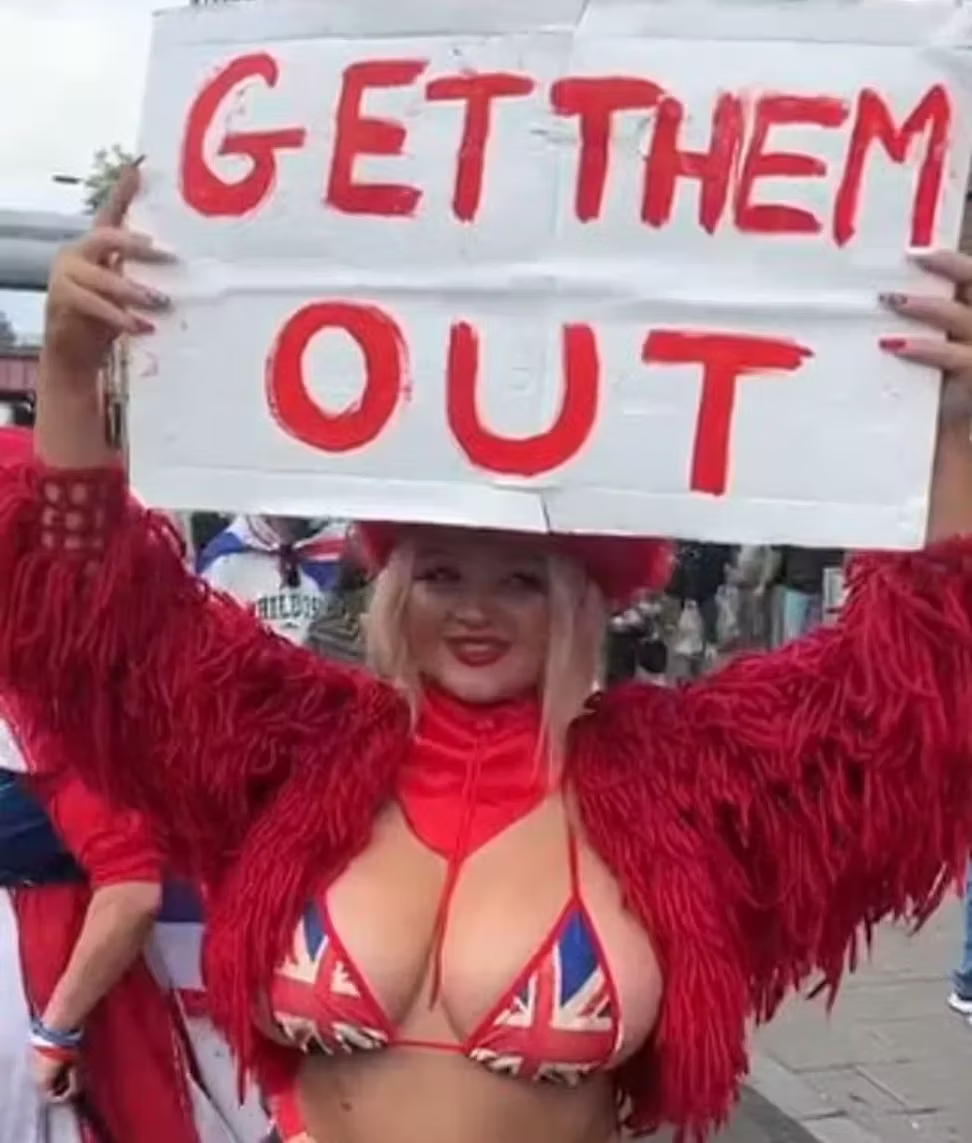

Over 130 people were injured, and around fifty were taken to the hospital, resulting in 26 officers injured and 25 arrests. All these images are brazen caricatures of Englishness. The one above shows a Robinson supporter as a Knight or Crusader. One is a grotesque caricature of being black. And one is grossly antisemitic. Unbelievable.
Clashes erupted with police and counter-protesters. The rally was described by Robinson as a celebration of free speech and a protest against what he saw as uncontrolled migration and political failures by the government and the police. Elon Musk made a surprise video appearance, calling for a change in the UK government. The rally amplified calls against immigration, paid tribute to slain far-right US activist Charlie Kirk, and featured appearances by French ultra-right politician Éric Zemmour. Elon Musk also put his boot in, sparking renewed debate and disquiet on Britain’s political and social divisions. These issues can be found dividing many societies. The far- right should not be allowed to sequestrate patriotism and the national flag to the far -right nationalism of 'Tommy Robinson' and others like him.
It's important not to demonise, but understand what made him 'Tommy Robinson'. Andrew Mellor's biography (2025) offers fascinating insights into some of his formative influences. Stephen Yaxley-Lennon grew up in Luton to working-class Irish Catholic parents. His father worked as a plumber, bringing in a modest income. His mother, Judith, worked as an assistant at a local bakery. They were both focused on ensuring that food was on the table, bills paid and so on. Being poor white British in Luton, itself an ethnically diverse town, was a struggle. It was also home to the Vauxhall Motor Company, which had been struggling financially for many years and finally closed in 2025.
'Tommy Robinson' was already becoming a radical extremist.

A significant proportion of Luton's population was from Pakistan and Bangladesh. These communities brought with them rich, vibrant cultures and religious diversity. New businesses were established, places of worship and community centres. etc. The haunting cry of adhan, the muslim call to prayer, began to be heard in the streets of Luton. It is easy to understand that the white working class, struggling financially, could fear being uprooted and displaced by 'them', black, Asian, economically prosperous immigrants. Stephen Yaxley Lennon was also exposed to these anxieties and pressures. He was dropping out of school and gradually becoming disconnected from secondary school, skipping classes. He did, however, get an apprenticeship at Luton airport, where he qualified as an aircraft engineer in 2004. This was no mean achievement, requiring a lot of discipline and determination for someone who did not take to educational disciplines easily. Yaxly-Lennon was also beginning to find a voice; he could organise grass-roots campaigns and found he had powers of far-right oratory, making inflammatory speeches akin to Enoch Powell's 'rivers of blood' speeches generations earlier. Inevitably, this led him to police attention, strip searches for weapons and so on. The police began to see him as a threat to public order around Luton. In due course, he was convicted of a string of criminal convictions, including assault, threats of violence, harassment and fraud, as well as contempt of court rulings related to his defamatory documentaries. He has served five prison terms between 2005 and 2025. 'Tommy Robinson' was becoming a far-right leader and founded the English Defence League. Before that, he was a member of the British Nationalist Party, which had proto-Nazi fascist roots. Lots of other factors, cultural and political, must have been at play, not just with him but with many thousands of other far-right extremists, originally in and around Luton. His notoriety and fame as a far-right agitator and orator culminated in the September 2024 march, attracting an estimated 100,000 followers. This has led to a toxic mix in which he has become the leading Far Right grassroots influencer.
Polarisation is splitting British society, and arguably getting worse. So far as the UK is concerned, knife crime is rife. The Labour Government has recently doubled down on its efforts to reduce knife crime, aiming to halve it in ten years, through a combination of legislative bans that restrict access to Zombie knives, machetes, and Ninja swords as much as possible, and increased police powers to detain under suspicion. Efforts to address knife crime. involve law enforcement, community outreach, education, and support for at-risk youth. This includes placing youth workers in A&E where executives are liable for illegal content. The Crime and Policing Bill (2025) strengthens laws against online knife sales, mandates against bulk sales, and holds tech executives liable for permitting illegal or provocative content. Weaponising vehicles has sadly become all too common. The photo below was taken during Liverpool's FA Cup victory in May 2025.

Anti-semitic attacks on Synagogues abound, not just in London but throughout the country. Incidents of unhinged maniacal idiots driving cars or vans into crowds abound, garnering a footnote on the news. What do we know about what actually goes on within far-right extremist networks? Precious little, but a recent, very courageous book by Henry Shukman titled The Year of the Rat (2025) documents his attempts to infiltrate these networks by secretly recording and filming his experiences with them. It was a very high-risk venture for him, involving the concealment of hidden microphones and audio-visual cameras. In a year-long project, mentored by a colleague in Love not Hate, he successfully infiltrated a far-right extremist group called by the innocuous-sounding name of the Basket Weavers. He recounts many narrow escapes, but finally succeeded in winning their confidence. What he found was scary. Meeting in the back room of a Wetherspoons pub, out-and-out racists began in full flow. One member: "A nation is only strong when it has pure stock." Others expressed fears of being overwhelmed by immigration. One said he was looking forward to visiting the countryside in the Spring. Why? Because there are no Blacks! Others fantasised about gunning down progressive civil servants: "Shoot them dead until the streets run red with their blood". He found that the Basket Weavers talked about which European cities had been 'ruined by Arabs' and customarily used racial slurs. They still used coded images to cover their racism. They used 'elves' to mean Jews. The acronym TND meant 'Total Nigger Death'. They would refer to 'the Austrian painter ', meaning Adolf Hitler. If they used the number six in conversation, it would mean the six million jews killed in the Holocaust was a myth, fake news. Whilst black people and muslims were frequently the target of their jeers and anger, behind it all were the Jews. There was a significant element of paranoia. The Jews were behind everything. THEY were responsible for the thousands of immigrants flooding into the towns and cities of the UK, from their perspective. Whenever religion was mentioned, the Jews were at fault, causing the death of Jesus, forgetting conveniently that Jesus himself was a Jew. The Basket Weavers, just one of many far-right networks in the UK, were really a forum for legitimising the free expression, once accepted in the group, of hatred and misogyny of every description. Such groups also exist across Europe and the USA. It's no surprise that during the COVID-19 pandemic, many became vaccine deniers. Angry and frustrated with mainstream politics, vindicating themselves in their hatred and resentment of those more successful at integrating into society, they remain a covert and toxic influence in many towns and cities across the UK.
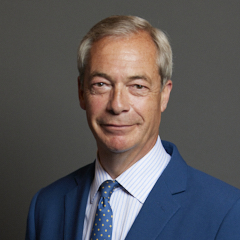
The coming force in British politics is Nigel Farage's Reform Party, which has been ahead in the polls and has already decimated the Conservative Party. Farage, the posh racist, misogynist from Dulwich College, might just have peaked.
Reform made net gains of 1,451 council seats, and the Labour Party made net losses of 1,496. Reform gained control of councils such as Newcastle-under-Lyme and achieved major breakthroughs in councils such as Barking and Dagenham. If these trends continue, the Reform Party could form the next government, and Nigel Farage could be the next Prime Minister of the UK in 2028.
Labour also suffered major setbacks in Wales, where it fell behind Plaid Cymru. The political landscape has been radically altered, and at this stage, a Reform Government cannot be ruled out. Nigel Farage seems to be immune to significant political damage, despite being subject to a parliamentary standards enquiry into the uses he has put a £5m gift from Christopher Harbourne, a bitcoin billionaire. Farage also faces allegations highlighted by the Guardian with respect to numerous allegations of racist threats and abuse whilst at Dulwich College in South East London in the early 1980's. More than 30 former classmates and some former teachers have cited incidents of racial abuse. The renowned documentary filmmaker Peter Ettedgui recalled incidents where Farage would approach him in the playground, growling 'Hitler was right' or making hissing noises redolent of the gas chambers in Nazi concentration camps.

Or would enter a classroom chanting 'gas them all'. Or loiter outside a synagogue on a Friday to jeer and taunt Jewish citizens entering for prayer. Horrifying. In his meticulous biography of Farage, Michael Crick (2024) documents his development from childhood to his role as the leader of the Reform Party, which swept all before it. As an adult, he was a stockbroker in the Stock Exchange, establishing his own business, Farage Futures, in 1994. As a politician, he became the leader of the Reform Party in 2024. and an MP for Clacton, also in 2024. Before that, he founded UKIP (UK Independence Party)from 2006 to 2016. He also served as a member of the European Parliament (MEP) from 1999 to the UK's withdrawal in 2020. Part after party indeed!
How such a controversial and odious individual could possibly be within touching distance of being the next British Prime Minister beggars belief. Inevitably, this has had a catastrophic effect on the Labour Party. Sir Keir Starmer, an honourable man with an inept political touch, Has been replaced by the soft left polpulist, the former mayor of Manchester, Andy Burnham. The British political landscape is in turmoil.
Reform surged in traditional strongholds of both main political parties. This has led to a splintering and fragmentation of the traditional two-party system. The Green Party has also seen a surge in popularity on the Left and in Wales. Recent local and Mayoral elections have seen a fundamental splintering of the two-way Labour-Conservative dominated first-past-the-post system.
Reform's objective is to unify far-right extremists into a politically electable party. This puts Nigel Farage under even more political scrutiny. Its problem is that electable Reform politicians get exposed by the left-of-centre press as having repugnant far-right backstories. The Guardian's attempts to reveal Farage's own backstory when a teenager as a rampant racist certainly made the headlines. Whether it will have any long-term impact remains to be seen. Does Reform have an electoral chance in local and national elections? It already has, and will continue to. The divisions in UK society remain deep and will likely continue. On July 7th 2026, Farage resigned from his Clacton seat. This was a characteristic manoeuvre by an opportunistic politician. He would have loved to have staged this as a fight between 'the establishment' (which he clearly is) and 'the common people' (which he clearly is not). He initially made his money as a stockbroker, and is very familiar with optimising the markets to his own advantage. This ploy was neatly undermined by all the other parties, which sidestepped the issue by deciding not to field a candidate, except for the honourable Count Binface.
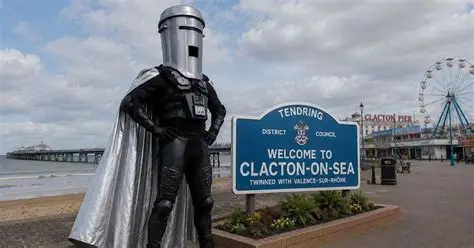
An Ipsos-Mori poll conducted on 8th July explored public opinion on his decision to resign his parliamentary seat and trigger a by-election, which is costing taxpayers £230,000. This may be backfiring badly. There is a call for Nigel Farage to be referred to the Electoral Commission to examine these improprieties. An Ipsos-Mori poll conducted on 8th July explored public opinion. In a hypothetical forced choice, one third would prefer the Count to win, whilst only 21% would prefer Farage to win. Three-quarters (74%) agreed that the Parliamentary standards committee should review his conduct, which will, in any case, happen. Meanwhile, some focus groups held with Clacton constituents found that there was annoyance and frustration, that Farage wasn't doing a good job as an MP, someone who cannot represent their views because he is rarely there, and is too busy to resolve any issues they may raise. Count Bonface may win!
Farage has been beset by a series of scandals. He received a
£5 million 'gift' from the Thailand-based bitcoin millionaire Christopher Harbourne in April 2024, which he did not declare. He had not registered or declared further financial support from the convicted bitcoin felon George Cottrell, to cover election expenses. Cottrell's mother further donated £500,000 to the Reform Party's coffers. Farage faces two inquiries from the parliamentary Standards Committee.


It's beginning to look as though the Reform Party may have peaked in the polls, as its national popularity is declining somewhat. Also, their track record in the councils they control is far from impressive. They have not been the 'new broom' claimed, but just another party making a mess with the local council concerned. At the same time, a resurgent Labour Party under Andy Burnham is for the first time in a year ahead in the polls.
On the very day of the Tommy Robinson demonstration in 2025, on the very same evening, I watched The Last Night of the Proms, which was a joyous and vibrant celebration of the power of music to unite divisions across class, race and culture. It was wonderful. The very same British flag was used to celebrate the four elements of the United Kingdom, and the four nations of Scotland, Ireland, Wales and England. It made me proud to be British.
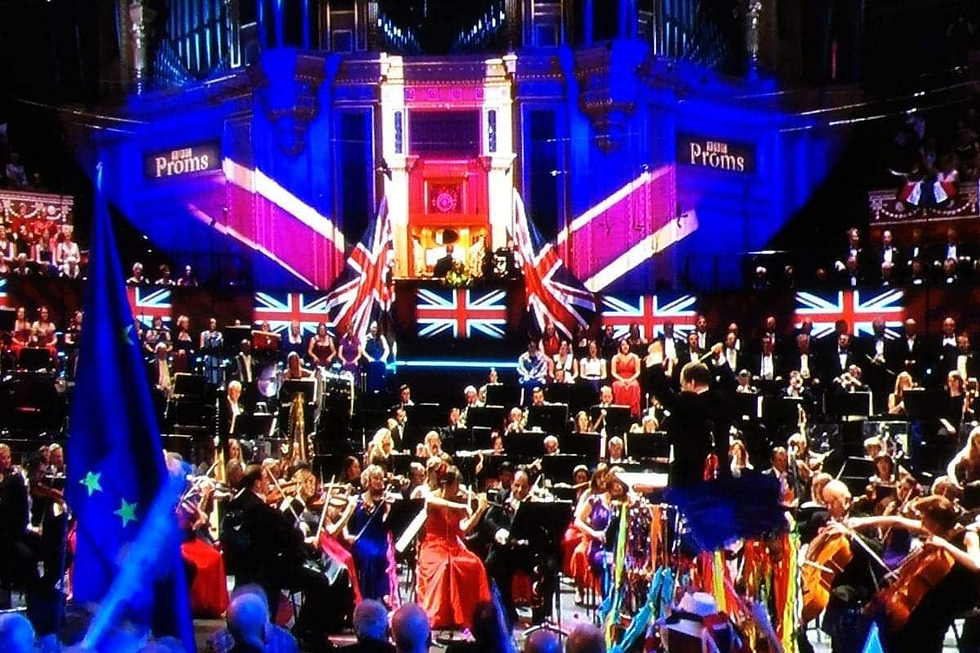

Another traditional favourite on the last night of the Proms is William Blake's Jerusalem, set to music by Hubert Parry. He wished to avoid the imperial jingoism of "Land of Hope and Rule Britannia so he decided to dedicate Jerusalem to the National Union of Women's Suffragettes. The lyrics of Jerusalem contain a profound message of hope, but also recognise the travails and conflicts of the Industrial Revolution, in the age when Blake wrote the poem. The 'Dark Satanic Mills' evokes the new factories gushing smoke from their chimneys and the Industrial Revolution. The price was being paid by the working people toiling in the new early Victorian factories.
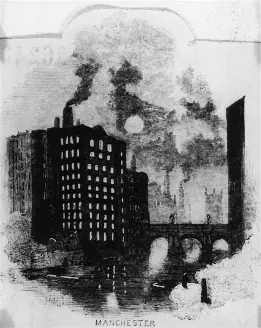
But there is also a reference to 'England's Green and Pleasant Land', a land of peace, love and beauty.
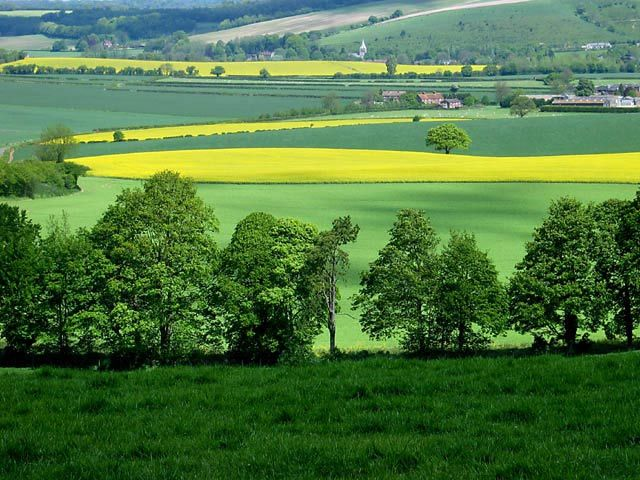
Caroline Lucas, in her book Another England: How to Reclaim Our National Story (2024), puts forward a vision of hope for the future. One of her most interesting points is that 'England' is always reinventing itself, particularly in times of national crisis.
I'm just going to choose a few of these crises to make the point of the ever-changing fluidity of 'Englishness'
In the 8th or 9th Century, after the Roman Empire's withdrawal from the British Isles, and before the establishment of Monarchy and Kingship as the vehicle of government in the 11th or 12th century, King Arthur and his knights became a heroic symbol of chivalry. 'Courtly values of Chivalry and Respect, Gallantry, honour and loyalty emerged as 'English', the values of a True and Gentle Knight. There were many difficulties in dating this, but it seems to have arisen when the Vikings began to invade North-Eastern England, though at that stage there was no sense of 'England' as an established nation state. But the myth of King Arthur served to give a stirring narrative to this emerging nation-state. As the Viking Invasion from Scandinavia spread south, there were clashes between the heathen gods of the Vikings and the Christian God of the invaded island. There were many Christian Martyrdoms. One occurred by the riverfront at Greenwich, a port of entry for Viking invasion. It was here that St Alfege was stoned to death in 1026.

'Englishness' has meant many different things to many different generations across centuries. It was only when the Viking colonisation spread south that resistance began to crystallise in Wessex, and mythic hero figures of the founding of England began to emerge in the shape of 'King Arthur and his Knights'.

King Arthur appears in numerous stories and legends, including
Le Morte d'Arthur by Sir Thomas Malory, published in 1485. A very imaginative re-imagining of the King Arthur legend was written by T.H. White. The Once and Future King was published in 1958. There is a continuing fascination with King Arthur; a mythical figure he may be, but one that continues to capture the popular imagination. There are numerous other retellings, including The Idylls of the King by Alfred Lord Tennyson, published in the late 1860's.
Skipping forward to another turning point, the first great English poet was Geoffrey Chaucer. The 'Canterbury Tales' signalled the emergence of Englishness as a common language when it was published in the late fourteenth century. The Tales portray with gentle irony a fully fledged English society. Some portray religious figures like the Friar, the Monk or the Parson as a genuinely holy man of the church, beloved of his parishioners:
"A good man there was of religion, a poor person of a town, but rich he was in holy thought and work. He was also a lerned man, a clark, that Christ's gospel trewly wolde prech.."
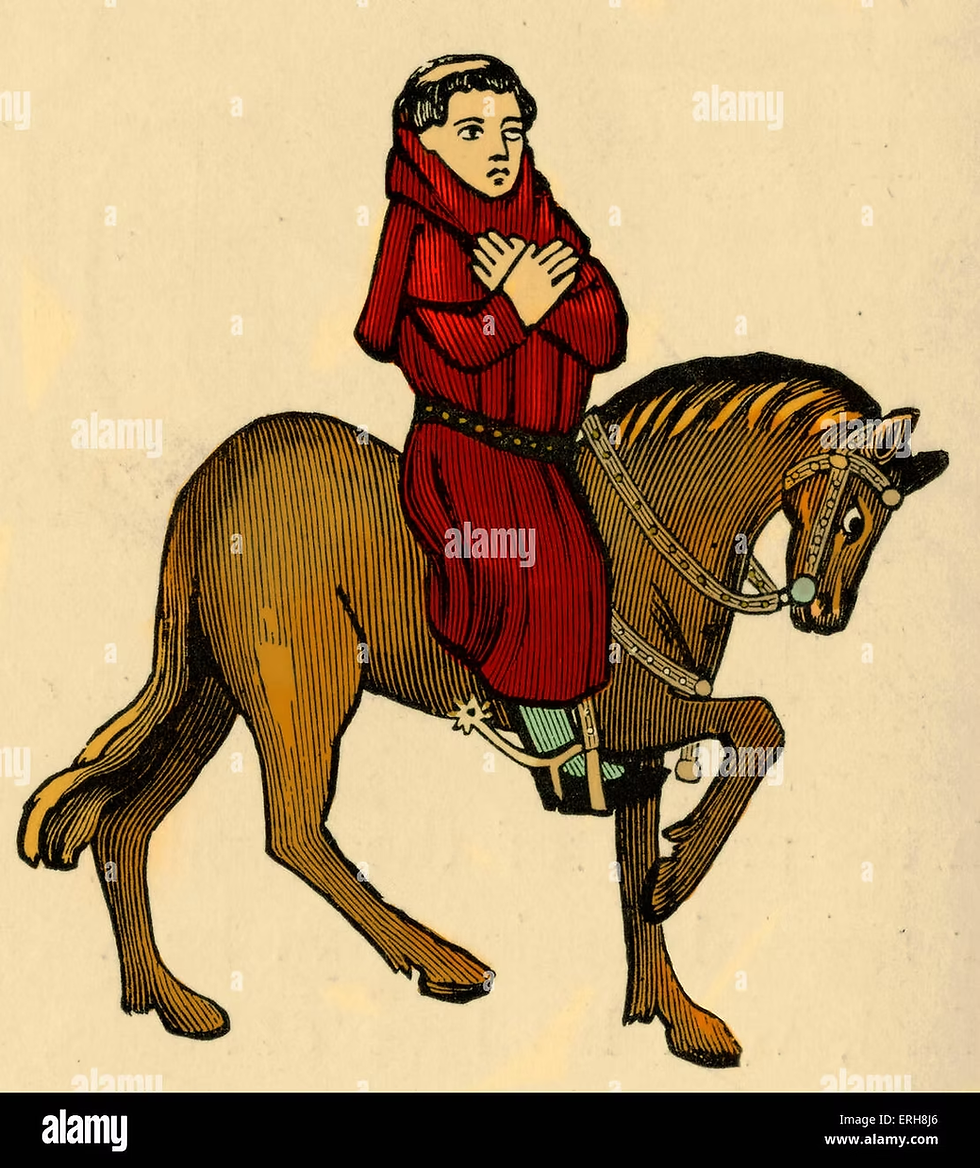
But the majority are drawn from secular figures. The first to be drawn is a lovely portrayal of the Knight. "A Knight ther was, and that a worthy man, fro the time he first began, To riden out he loved chivalrie, Trouthe honour, fredom and and coutesie"

Civic society of the time was also well represented, including a Miller, a Pardoner, a Manciple (Lawyer), a Franklin, a wealthy owner of free land, a physician, a shipman, and, of course, the Wife of Bath. All English society, in its complexity, distinction and corruption, is there. It is both a poetic masterpiece and a wonderful evocation of 'Englishness' in a well-established medieval society. Some of these characters could be venally corrupt. The most unsavoury was the Pardoner, who would sell the 'guarantee' of heaven for cash.

The Incorrigible Wife of Bath is one of the most famous characters.
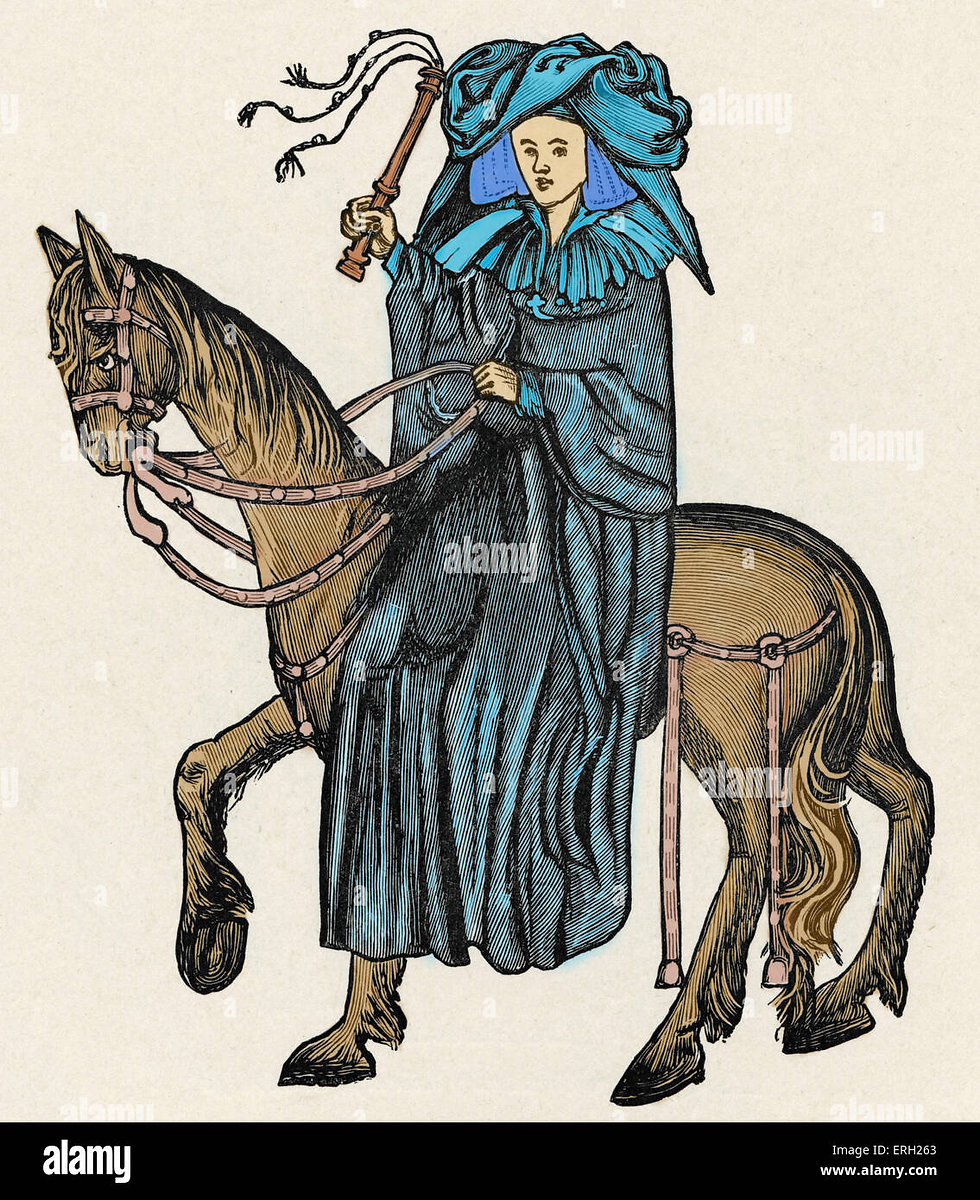
"In fellawshipe wel coude she laugh and carpe, of remedies of love she knew per chaunce for she coude of that arte the old daunce"
In the Elizabethan era, we see an even more complex society, yet one riven by conflicts and ambiguities. It was not, in this sense, a 'golden age', but one addressing multiple challenges, both religious, political, and of governance. Elizabeth 1st inherited a country split between Catholics and Protestants. Queen Mary was the previous monarch and zealously Catholic. Elizabeth's 1559 religious settlement sought a middle way in which both Protestants and Catholics could practice their religion with a degree of tolerance. Puritans thought it wasn't Protestant enough, and Catholics faced recusancy fines. There were also conspiracies to replace the Protestant Elizabeth with the Catholic Mary Queen of Scots. There was also a succession crisis. Elizabeth, the 'Virgin Queen' remained unmarried as it was politically dangerous for her to marry a man associated with anyone linked to any one of the family amongst the nobility.

With no clear Protestant successor for most of her reign, everyone feared civil war after she died. It was only resolved near the very end of her reign when she named James 1st as her successor. She also faced continual threats from Catholic Spain, which launched the unsuccessful Spanish Armada in 1588, intended to invade and conquer England.
Paradoxically, it was in this extremely fraught context that the genius of William Shakespeare gave unparalleled expression in the theatre through his comedies, tragedies, and history plays.

'Englishness' for him was complex and ambiguous, not straightforward. Perhaps the purest, most poetic but darkly foreboding expression of this is in Richard 2nd in which the dying John of Gaunt extols the fragile beauty of England and also its vulnerability "This royal throne of Kings, this sceptred isle, this isle of majesty, this seat of Mars, this other Eden, demi-paradise, this fortress built of Nature for itself, this happy breed of men, this little world, this precious stone set in a silver sea, which serves it in the office of a wall, this band of brothers, is now leased out", is now bound with shame, with inky blots and rotten parchment bonds, hath made a shameful conquest of itself.."
In the play, John of Gaunt was a figure of authority, representing the voice of England's older political and moral order, the rule of law in modern parlance. He was therefore extremely well-positioned to comment on those, like Richard, who were uprooting it. He spoke so eloquently of England's greatness as a blessed, almost sacred land. He himself was of the ancient line of nobility, an elder statesman, and a passionate advocate for unity, not division and conflict. Gaunt's speeches were a commentary on Richard's weakness, moral vacuity, wastefulness, and poor judgment. He showed how a king can lose moral authority even if still holding legal power, justified by the Divine Right of Kingship: "Deposing thee before thou wert possessed, which art possessed to depose thyself. Why, cousin, wert thou regent of the world, it were a shame to let this land by lease; landlord of England art thou now, not king. Thy state of law is bond slave to the law."
There were several moral warnings for the play's audience if they chose to listen. Firstly, a ruler who abuses power, ignores justice, and mistakes divine authority for personal entitlement will eventually lose legitimacy, fail, and be deposed- which is exactly what happened to Richard 2nd. Richard believed that he was entitled to remain in power, regardless of what he did. Historically, however, he unjustly banished loyal nobles loyal to his cause, like Henry Bolingbroke, who later returned to depose and replace him as Henry 6th.
Shakespeare presents Richard as a King who believed in divine right, that his authority is legitimised by God. His moral failings led to his downfall: power corrupts, and absolute power corrupts absolutely. In his famous garden allegory, England is likened to a neglected garden, overrun with weeds - an image of Richard's misrule. His failure to weed out corruption was compounded by his indulgence and incompetence.
Perhaps the message Shakespeare wished his audience to draw was that a kingdom thrives only on active and virtuous stewardship. When those in power neglect and abandon their responsibilities, the rot sets in.
Shakespeare was able to achieve an extraordinary balancing act in this most turbulent century, writing some of the greatest theatrical masterpieces ever written. At the same time, he illustrated in his plays the dangers of plotting the overthrow of the Monarch, whether that was Queen Elizabeth or, after her death, James 1st.
There are numerous other occasions when England has been in crisis, notably the First and Second World Wars of the Twentieth Century. There are very few times in human history that are replete with peace and stability. The two world wars of the Twentieth Century killed millions.


Over one million British and British Empire troops were killed in the First World War, and over two million German troops. It yielded some compelling autobiographies, such as Robert Graves' Goodbye to All That ', and on the German side, Erich Remarque's novel All Quiet on the Western Front. But for me, the essence of this world-shattering conflict was best captured by Wilfred Owen. He himself was killed in action just one week before the end of the war on November 4th, 1918, leading his troops in an attempt to cross the Sambre-Oise canal at the village of Ors.

One of the many remarkable poems he wrote is Anthem for Doomed Youth
'What passing bells for those who die like cattle?
Only the monstrous anger of the guns,
Only the stuttering rifle's rapid rattle
Can patter out their hasty orisons.
No mockeries now for them.
No prayers or bells. Nor any voice of mourning save
The choirs
The shrill demented choirs of wailing shells...'
The poetic voice of Wilfred Owen is one of passionate, bitter anger and despair at the utter futility and waste of young life and anger at the nation that was complicit in sending them to their deaths. He mocked and condemned 'English Patriotism'.
Millions of young men paid the price. For those of us lucky enough to have been born after the end of the Second World War, we were not thrust into the turmoil of conflict. We did not have to risk death or injury. We were able to reap 'the peace dividend' both individually and collectively. However, it is also the case that for many individuals and families, poverty and deprivation have been a scourge, tearing people and families apart.
Is Britain broken? Let's put it this way, disorder and chaos are tapping on its shoulder. There's no time to lose. The Far Right are knocking on the door, both on the streets and in local and national elections.
However, 'Englishness' remains, ever fluid, ever changing, just like Father Thames. Edmund Spenser expressed this beautifully in his poem Prothalamion:
Sweet Themmes runne softly, till I end my Song"
Like an ever-flowing river, England can never be defined as belonging to one particular group or political entity. It is eternal, because it expresses the true essence of Englishness, elusive perhaps, ever changing, ever truthful to its own essential nature.


Thank you, Peter. Who could disagree? A wonderful collection of photos and images. A positive account of what it was like to take part in a demo written for the Westcombe News would reach a wider readership?